



The workshop consumables checklist: what to keep on the shelf

A dual battery system gives your 4WD the freedom to power fridges, lights and tools without draining your starting battery. Here is how it works and what goes into one.
System basics
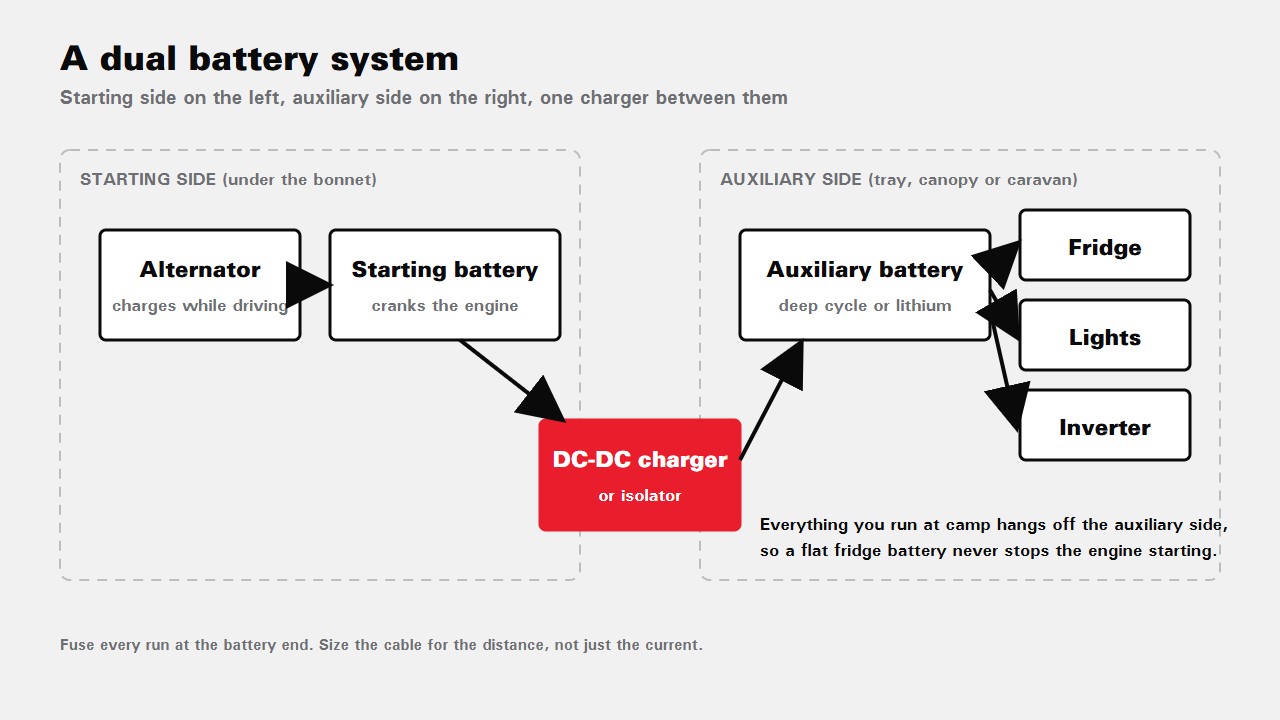
Three parts, each with one job:
- One battery cranks the engine: the starting battery
- A second battery powers the accessories: the deep cycle (auxiliary) battery
- A DC-DC charger or isolator manages the flow between the two, so the auxiliary battery charges while you drive and the starting battery is never pulled down by the fridge
Isolator or DC-DC charger?
A simple isolator joins the two batteries when the engine is running and separates them when it stops. It is cheap and works with a conventional alternator and an AGM or flooded auxiliary. A DC-DC charger takes the alternator's output and charges the auxiliary battery with a proper multi-stage profile, which is what you need with a smart alternator, with a lithium auxiliary battery, or when the auxiliary sits a long cable run away in a canopy or a camper trailer.
Battery choices for the auxiliary
Match the chemistry to your budget, weight limit and how long you stay off-grid:
- AGM deep cycle: a good balance of cost, durability and performance
- Lithium: lightweight, long life and fast charging, but needs a proper battery management system and a lithium-capable charger
- Flooded deep cycle: works well if it is mounted where you can check and top it up regularly
Short version: a dual setup is essential for extended off-grid touring. RedPoint helps design systems to suit your budget and gear, with no guesswork.